
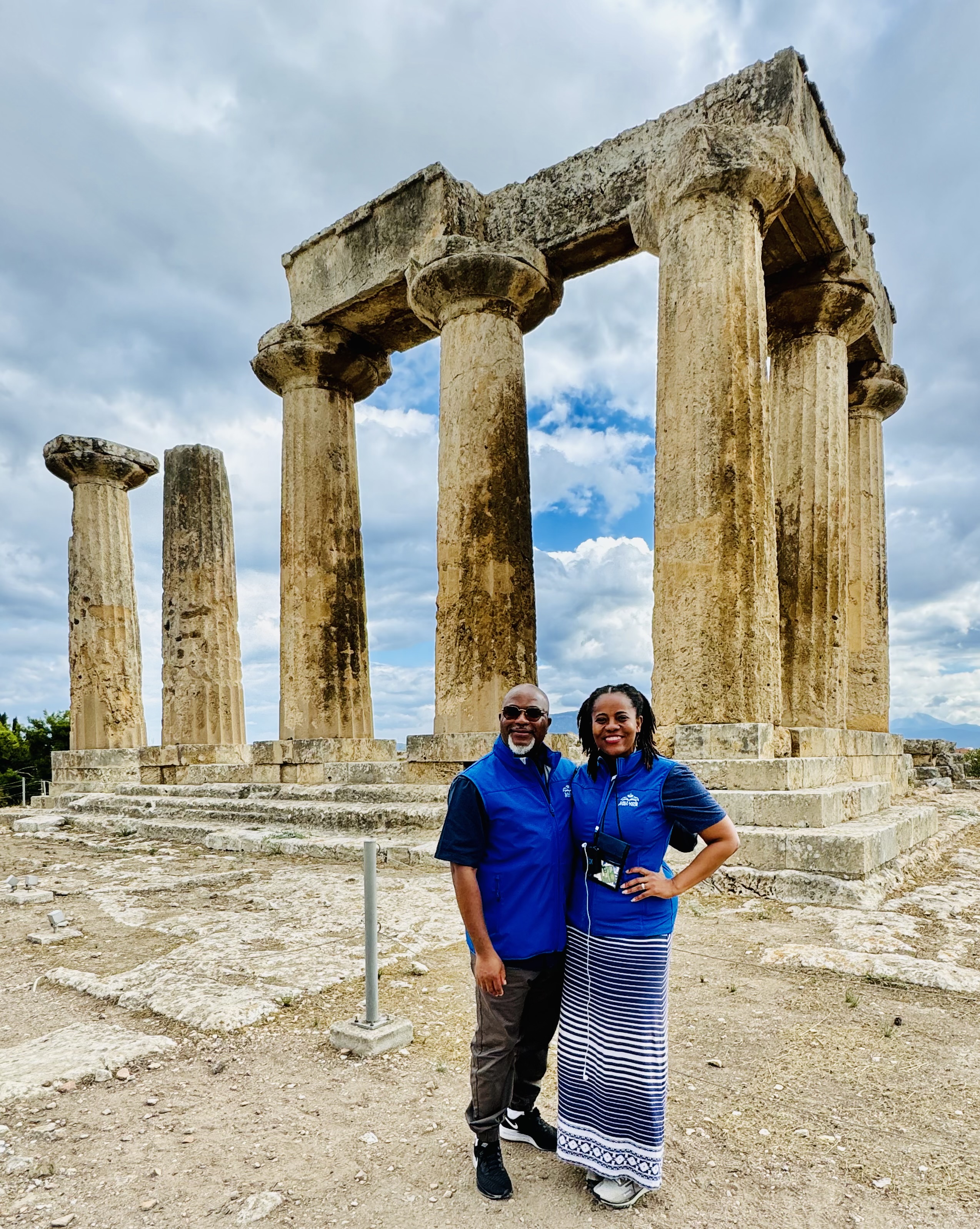
Our visit to the Ancient Corinth Archeological Site and Museum today was a profound exploration of both history and faith. As I walked through the ruins, I was struck by the strategic importance of Corinth, a city that has been inhabited since around 7,000 BC. Its location enabled it to flourish as a center of commerce, yet it also exposed the city to frequent conflicts and hardships.
In the time of the Apostle Paul, Corinth was a vital and influential city in ancient Greece. Paul himself spent a year and a half here, as recorded in Acts 18, working as a tentmaker alongside his fellow laborers, Priscilla and Aquila. Corinth played a significant role in Paul’s missionary work, and today, walking through the same streets where he once walked, I was reminded of the importance of this city in shaping early Christianity.
Above the city is the Acropolis of Corinth, where the Temple of Aphrodite still stands. The worship of Aphrodite, the goddess of love, was central to the culture of Corinth, and the temple’s association with sexual immorality and slave prostitution was a stark contrast to the message Paul brought to this city. I also reflected on the nearby meat market, where sacrifices were made to various gods. This practice led to Paul addressing the question of whether it was appropriate to eat meat sacrificed to idols, a matter he dealt with in 1 Corinthians 8.
As our time in Greece comes to a close, I find myself reflecting on the juxtaposition of the old and the new, a theme that was particularly poignant today. The temples, columns, and remnants of ancient buildings, constructed over 2,400 years ago, still stand in part, representing the wisdom, creativity, and faith of those who came before us. These ruins are the foundations of modern philosophy, politics, culture, and faith. Without them, our world today would look vastly different.
Archaeologists have discovered layers of a Roman city built upon the remains of Greek Corinth, illustrating how the new grows from the old. The old city of Corinth lies lifeless, with its piles of rubble and standing pillars, in contrast to the vibrant, bustling modern Corinth city that continues to grow nearby. I couldn’t help but think about how this mirrors our own lives. Our ancestors, past experiences, and even our former selves—though no longer present—continue to shape who we are today.
Spiritually, this reminded me of Paul’s words in 2 Corinthians 5:17: “Therefore, if anyone is in Christ, the new creation has come: The old has gone, the new is here!” Just as new Corinth rises from the ruins of the old, so too does our new life in Christ rise from the death of our old selves. Today, I was reminded that I am no longer the person I once was. The old Terry has passed away, and the new Terry stands here, transformed by Christ.
Corinth, in all its ancient glory and present vibrancy, is a powerful symbol of renewal—both physical and spiritual. As I reflect on my time here, I am reminded of the enduring truth that the new creation in Christ is built upon the foundation of the old life, but it is a life transformed, renewed, and made whole.


 soapflavoredmangos