

Thursday,
Today began with an early breakfast at 6:30 am before we bid farewell to The Met Hotel in Thessaloniki. Our first stop was the impressive Roman Rotunda, now the Church of St. George, where we admired the ongoing restoration work and the inspiring frescoes honoring Christian martyrs. From there, we explored Thessaloniki’s Old Town Acropolis, walking by the ancient city walls through which Paul would have entered. This area, known as the *Municipality of the Apostle Paul*, served as a refuge for the city’s residents during attacks.
We then journeyed on the Egnatia Odos toward Berea, also known as the “Jerusalem of Greece” due to its many Byzantine churches. These humble churches, often disguised as homes during Ottoman rule, symbolize the resilience of the Christian faith. In Berea, I reflected on Acts 17:11, where the Berean Jews are praised for eagerly examining Paul’s teachings against the Scriptures—a practice that challenges me to deepen my own understanding and conviction.
After this spiritual reflection, we enjoyed a delightful lunch, highlighted by the local dessert, Revani of Berea. Our day concluded as we traveled to the other side of the Pindos mountains.
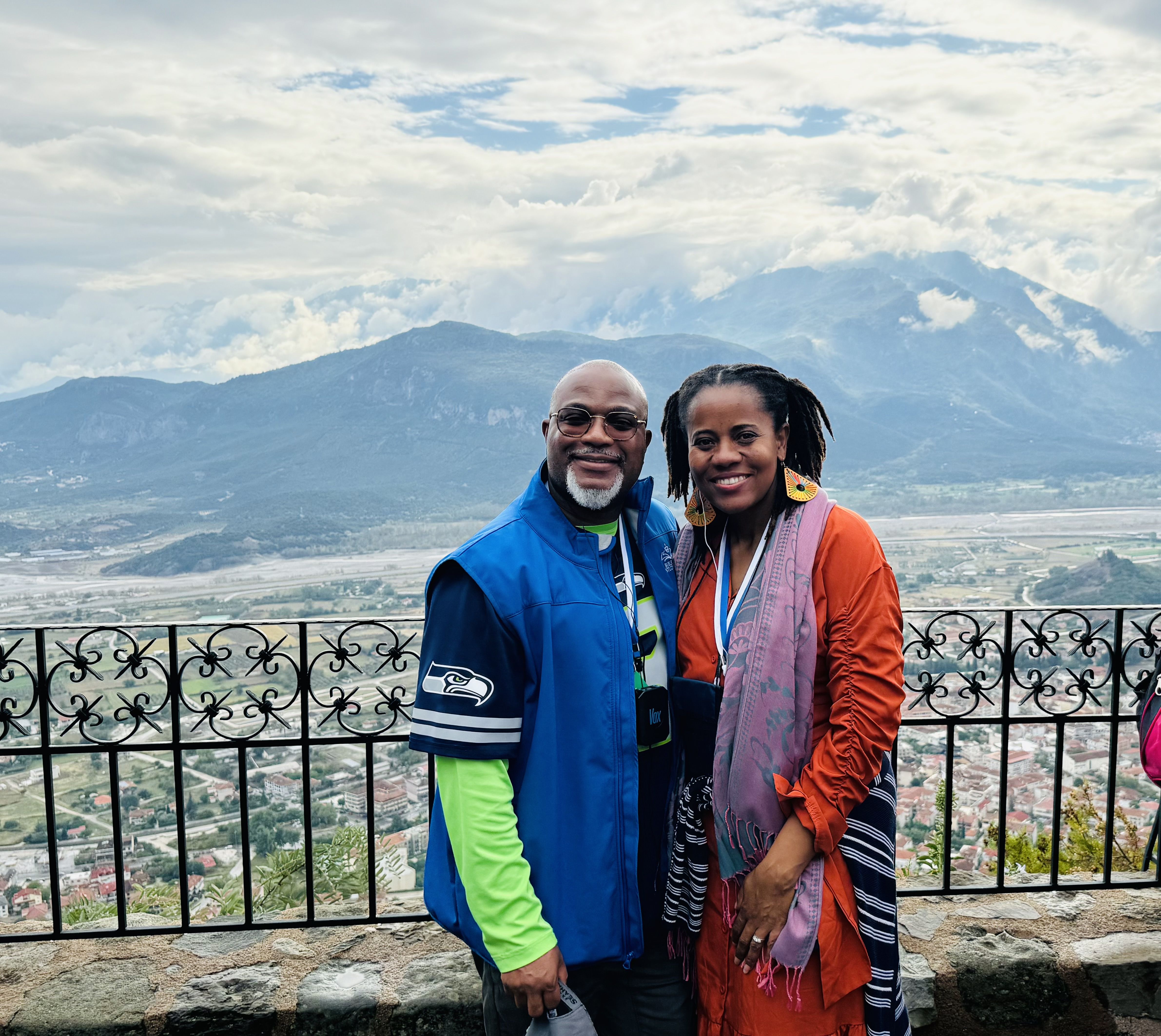
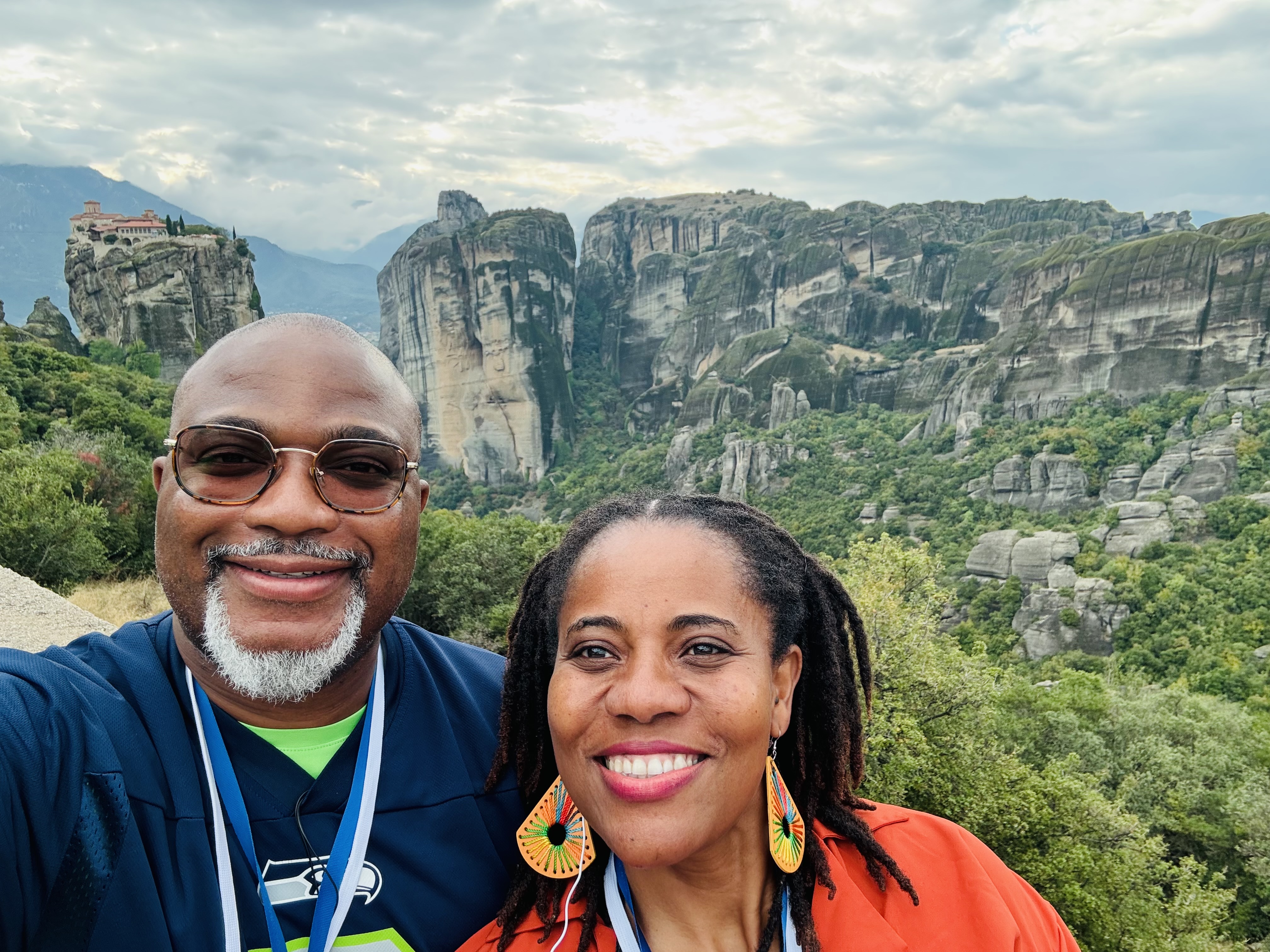
After our time in Berea, a couple of hours’ drive brought us to one of Greece’s most awe-inspiring sites: the monasteries of Meteora. Words alone can hardly capture the majesty of these ancient buildings, perched on towering rock formations, as if suspended between earth and sky. The very name “Meteora” fittingly translates to “suspended in the air” or “floating in the sky.” These monasteries, with their holy atmosphere and breathtaking surroundings, seem to touch the heavens.
Our group visited the Holy Monastery of Saint Stephen, where the sense of sacredness was palpable as we entered. We were warmly greeted by a few sisters (nuns), all dressed in their traditional black robes (habit), a reflection of their simple, humble, and devoted lives. Inside the church, our eyes were drawn to the icons that adorned every wall. Images of martyrs, apostles, and Christ filled the space, creating a profound sense of reverence. These icons, along with various church symbols, rose from the walls to the ceiling and rotunda, transporting us into a world deeply rooted in the origin of our faith.
As I stood inside the monastery, I couldn’t help but wonder about the incredible feat of construction. How had the monks and nuns, centuries ago, managed to build such magnificent structures high above the ground, on the very tops of these rock pillars? It is said that it took 22 years to transport every brick, stone, and piece of lumber to the top of these hills—and only 22 days to construct the churches themselves. This astonishing detail adds yet another layer to the awe one feels when visiting Meteora.
The Holy Monastery of Saint Stephen is a place where the sacred truly meets the sublime, and the experience left us humbled, our hearts uplifted by both the physical and spiritual heights of this holy place. I am still processing all I saw and experienced today. This has to be one of my most profound spiritual moments of my life, at the same level as the experience I had a few years ago, while I prayed kneeling under a tree in the Garden of Gethsemane in Israel.
We stayed overnight at the quaint and charming Hotel Meteora, situated directly across from the stunning Meteora rock formations. The rooms are elegantly decorated, and the three-course dinner was exquisite. Another beautiful day in Greece.




 soapflavoredmangos